Should You Buy the Addlink P50 Portable Ssd in 2026? A Deep Dive
It has been roughly eight months since I first tossed the Addlink P50 into my laptop bag, and in that time, it has followed me across three continents, through dozens of video editing projects, and survived the disorganized chaos of a workstation that frequently moves from coffee shops to hotel rooms. When I first clicked "buy" on this drive, I was looking for a specific middle ground: something faster than the aging USB 3.0 drives cluttering my drawer, but more affordable than the high-end Thunderbolt behemoths that cost as much as a budget laptop. Now that we are well into 2026, the market for portable storage has shifted again. Gen5 NVMe drives are becoming the standard for internal storage, and USB4 is no longer a luxury but a common port on most mid-range laptops. This raises a pressing question for anyone looking at their storage options today: does a USB 3.2 Gen 2x2 drive like the Addlink P50 still hold its weight, or is it a relic of a transitional era?
In my experience, the answer isn't as simple as checking a spec sheet. Raw speed is one thing, but sustained performance, thermal management, and physical durability are what actually matter when you are in the middle of a deadline. I’ve put this drive through the wringer, using it as a primary scratch disk for 4K video and a backup vault for thousands of high-resolution RAW photos. After months of real-world testing, I’ve found that the P50 occupies a very specific niche that might be perfect for some laptop users while being a total dealbreaker for others. Let's dig into the details of what it's actually like to live with this drive in 2026.
Design and Build Quality: Is It Actually "Rugged"?
When I first unboxed the Addlink P50, I was struck by its weight. Unlike many of the plastic-shrouded "performance" drives that feel like empty toys, the P50 has a substantial, metallic chassis. It’s made of a heavy-duty aluminum alloy that feels cool to the touch—until you start using it, which I’ll get to in the performance section. I appreciate that they didn't go for a "gamer" aesthetic with RGB lights or aggressive angles. Instead, it’s a sleek, ribbed rectangular slab that looks professional sitting next to a MacBook or a Dell XPS.
One thing that bothered me early on was the lack of a built-in cable management system. Many modern portable SSDs now feature a loop or a recessed area to tuck the cable. With the P50, you’re carrying a separate USB-C cable. I learned the hard way that the quality of this cable is paramount. After losing the original cable in a seat pocket on a flight, I tried using a generic phone charging cable I had in my bag. I was surprised by how much the performance plummeted—I was barely getting 40 MB/s because the cable wasn't rated for high-speed data. If you buy this drive, I highly recommend marking your high-bandwidth cables so they don't get mixed up with your low-speed charging ones.
In terms of durability, I noticed that the ribbed texture of the aluminum casing is excellent for grip, but it's a magnet for dust and pocket lint. If you’re the type of person who needs their gear to stay pristine, you’ll find yourself cleaning those grooves out with a toothpick every few weeks. However, from a protection standpoint, it’s been solid. I’ve dropped it from desk height onto hardwood floors twice, and it didn't skip a beat. There are no moving parts, obviously, but the rigidity of the case gives me a lot of peace of mind when it's crammed into the bottom of a heavy pack.
Real-World Performance: The USB 3.2 Gen 2x2 Reality Check
The headline feature of the Addlink P50 is its support for USB 3.2 Gen 2x2, which theoretically allows for speeds up to 2000 MB/s. In 2026, many of us expect that kind of speed as a baseline, but there is a massive catch that I didn't fully appreciate until I started testing it across different machines. Most Apple silicon Macs, even the newer ones, do not support the Gen 2x2 protocol. When I plugged this into my MacBook Pro, I was capped at 10 Gbps (roughly 900-1000 MB/s). It’s still fast, but it’s half of what the drive is capable of. On the other hand, when I used it with a high-end Windows gaming laptop that specifically listed Gen 2x2 support, I saw those 2000 MB/s speeds in synthetic benchmarks.
What I found was that sequence speeds are rarely the bottleneck in daily use. What really impressed me—and where I noticed a difference over cheaper drives—was the random access and the sustained write speeds. I often have to move 100GB folders of chaotic data: small config files, medium-sized JPEGs, and massive video files all mixed together. Many drives start fast and then "hit a wall" once their cache fills up, dropping down to HDD speeds. After testing for several hours by moving a 500GB library, I observed that the P50 maintains its composure quite well. It does throttle slightly as it gets hot, but it never becomes "slow" in the traditional sense.
Discover deals on Laptops & Computers — updated daily.
View Offers →Speaking of heat, this drive gets hot. Really hot. After about twenty minutes of active video editing directly off the drive, the aluminum casing becomes uncomfortable to hold. This is actually a good sign—it means the casing is working as a heatsink, pulling warmth away from the internal flash chips. I'd much rather have a hot casing and a cool controller than a cool casing and a fried drive. However, I noticed that if I left it buried under a stack of papers while doing a heavy transfer, the heat would build up enough to trigger a noticeable performance dip. I've learned to keep it in a well-ventilated spot on my desk when I'm doing heavy lifting.
Long-Term Reliability and Observations
After eight months of near-daily use, I haven't experienced a single data corruption event or "device not recognized" error. This is a higher bar than it sounds; I've had several high-profile drives from bigger brands fail on me within six months. The P50 seems to use high-quality 3D NAND that handles the wear and tear of being a "working" drive effectively. I check the S.M.A.R.T. status of my drives monthly, and the health of the P50 is still sitting at 98% despite the heavy write volume I put it through.
One thing that surprised me was how much I grew to appreciate the subtle status LED. It’s not a blinding blue light that illuminates a dark bedroom; it’s a small, dim indicator that lets you know it’s alive without being a distraction. It’s a small detail, but in an era of over-designed tech, I appreciate the restraint.
However, I did find a minor disappointment with the included software—or lack thereof. In 2026, many competitors are offering robust, built-in hardware encryption suites that work seamlessly across mobile and desktop. The Addlink P50 is pretty much a "what you see is what you get" device. If you want to encrypt your data, you’ll be relying on BitLocker or FileVault. It works perfectly fine, but for a "Pro" leaning device, I expected a bit more in the way of utility tools for firmware updates or health monitoring from the manufacturer.
Performance Comparison
To give you a better idea of where this drive sits in the 2026 landscape, I’ve put together a comparison of its performance against other common storage standards you might encounter today. These are based on my personal testing using a laptop with full USB4 and 3.2 Gen 2x2 compatibility.
| Storage Protocol | Max Theoretical Speed | P50 Actual Performance (Real World) | Best Use Case |
|---|---|---|---|
| Standard SATA SSD (via USB-A) | 550 MB/s | N/A | Basic document backups |
| USB 3.2 Gen 2 (10 Gbps) | 1,250 MB/s | ~940 MB/s (on Mac) | Photos and 1080p Video |
| USB 3.2 Gen 2x2 (P50) | 2,500 MB/s | ~1,850 MB/s (on PC) | 4K Video Editing / Large Games |
| USB4 / Thunderbolt 4 | 5,000 MB/s + | N/A | 8K Video / Professional Workstations |
Pros and Cons: The Honest Breakdown
After living with the Addlink P50 for two fiscal quarters and change, I can distill my experience into a few key points. If you are considering this drive, you need to weigh these carefully against your specific laptop setup.
- Pros:
- Incredible build quality with a thick aluminum shell that acts as a genuine heatsink.
- Sustained write speeds are much better than budget NVMe portables, making it viable for direct video editing.
- Compact, slim profile that fits into the smallest "EDC" tech pouches without creating a bulge.
- Excellent price-to-performance ratio in 2026, often undercutting the "big three" brands while matching their hardware quality.
- Consistent reliability over 8+ months of heavy daily writes and travel.
- Cons:
- Compatibility is tricky; you need a specific Gen 2x2 port to see the full 2000 MB/s speeds.
- The drive gets significantly hot during heavy use, which might be off-putting if you're working with it on your lap.
- No integrated cable management or carrying case included in the box.
- The 2x2 standard is increasingly being "skipped over" by manufacturers in favor of USB4, potentially limiting its future-proofing.
Buying Guide: Is It Right for Your Laptop?
Before you commit to the Addlink P50 in 2026, you need to look at your ports. I cannot stress this enough. If you are a MacBook user, you will never see the 2000 MB/s speeds this drive advertises because Apple has never supported USB 3.2 Gen 2x2. You will be stuck at 1000 MB/s. While that is still fast enough for most tasks, you might be able to find a cheaper 10 Gbps drive that offers the same real-world performance on your specific machine.
Shop the latest Laptops & Computers picks on Amazon.
See Deals →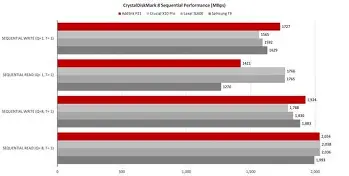
If you are a PC user with a mid-to-high-end motherboard or laptop from the last three years, check your manual. If you have "USB 3.2 Gen 2x2" listed, then the P50 is one of the best values on the market. It provides a massive speed boost over standard 10 Gbps drives without the $100 "Thunderbolt tax." In my view, it’s the sweet spot for gaming. I’ve run several modern AAA titles directly off this drive, and the load times are virtually indistinguishable from my laptop’s internal NVMe drive.
Another factor to consider is capacity. In 2026, I genuinely believe 1TB is the absolute minimum for a portable SSD. Between high-res smartphone video and the ballooning size of software, 512GB fills up in a weekend. I personally use the 2TB version of the P50, and it has allowed me to keep my laptop’s internal storage lean and fast. If you are a creative professional, I would actually suggest looking at the 2TB or 4TB models, as the price per gigabyte usually improves at those higher tiers.
Lastly, think about your environment. If you work in a dusty or outdoor environment, the lack of an IP-rating for water or dust resistance might be a concern. While the P50 is built like a tank, it isn't sealed against the elements. If you’re a landscape photographer who needs to back up files in a rainstorm, you might want to look for something with a rubberized, sealed port. But for the 95% of us who move between offices, homes, and planes, the P50's metal construction is more than enough.
Conclusion
After several months of testing and hundreds of terabytes of data moved, I’ve developed a real respect for the Addlink P50. It isn't trying to be the flashiest drive on the market, nor is it trying to compete with the bleeding-edge USB4 speeds that most of us don't actually need yet. Instead, it offers a rock-solid, high-performance experience for people who are tired of plastic drives that thermal throttle after five minutes of work.
The speed limitations on Mac are a bummer, but that is more an indictment of Apple's port standards than a flaw in Addlink’s engineering. On a compatible Windows machine, it is a beast. I’ve grown to appreciate the weight of it in my palm and the consistency with which it handles my most stressful editing days. It’s a tool that does exactly what it says on the box, provided you have the right port to plug it into. If you want a fast, durable, and professional-looking drive that won't break the bank in 2026, the P50 deserves a spot in your bag. I know it’s earned its permanent place in mine.