Nintendo Switch 2 Console Review: Real User Experience After 3 Months
I still remember the morning I finally got my hands on the Nintendo Switch 2. After years of speculation, technical leaks, and "Pro" model rumors that never materialized, holding the actual successor to one of the most beloved consoles in history felt surreal. I didn't get a review unit; I stood in line like everyone else, paid my own money, and have spent the last ninety days treating this device as my primary gaming platform. I’ve taken it on cross-country flights, used it during my daily train commute, and spent countless late nights docked to my 4K television. After the initial "honeymoon phase" wore off, I started to see the console for what it truly is: a remarkable leap forward that nonetheless carries some of that classic, quirky Nintendo friction.
The First Impression: Familiarity Meets Refinement
When I first took the Switch 2 out of the box, I was surprised by how "grown-up" it felt. The original Switch always felt a bit like a toy—albeit a high-end one—with its plastic screen and slightly wiggly Joy-Cons. The Switch 2 feels denser and more intentional. The 8-inch display is the first thing I noticed. Moving from the 6.2-inch original or even the 7-inch OLED model to this larger footprint makes a massive difference in hand. I found that I was no longer squinting at fine text in sprawling RPGs. It feels less like a handheld and more like a portable portal into a high-end gaming world.
In my experience, the new magnetic rail system for the controllers is a game-changer. I was initially worried that magnets wouldn't be secure enough for intense sessions of Super Smash Bros., but what I found was a connection that feels sturdier than the old physical slides. There's no "creak" when I grip the console tightly during a tense boss fight. However, one thing that bothered me immediately was the compatibility—or lack thereof. While my old Joy-Cons connect via Bluetooth, they don't slide onto the sides of the new unit. I’ve had to invest in new peripherals, which was a bitter pill to swallow after building a collection over the last seven years.
Performance and the DLSS Magic
The "wow" factor of the Switch 2 really hits when you see the jump in graphical fidelity. For the first month, I spent most of my time replaying the enhanced "launch window" titles. What I found was that the inclusion of NVIDIA’s DLSS (Deep Learning Super Sampling) isn't just a technical bullet point; it changes the entire experience. In the past, playing a game like The Legend of Zelda: Tears of the Kingdom in handheld mode meant accepting a resolution that often dipped into blurry territory. On the Switch 2, I noticed that the image remains crisp and stable, even when the screen is filled with explosions and physics calculations.
After testing for hours in both docked and handheld modes, I was surprised by how much I preferred handheld. When docked, the console outputs a very respectable 4K signal that looks great on my living room TV, but the pixel density on the 8-inch handheld screen makes games look incredibly sharp. In my experience, the jump from the original Switch to the Switch 2 feels much larger than the jump from the Wii to the Wii U. It feels like moving from the PlayStation 3 era straight into the PlayStation 5 era, which is a staggering achievement for a device that fits in my backpack.
Load Times: A Silent Hero
One of the biggest frustrations I had with the original hardware was the wait time. I’ve grown accustomed to the near-instant loading of modern PCs and other high-end consoles, so going back to the original Switch felt like stepping back in time. With the Switch 2's new NVMe-based storage solution, I was delighted to find that those long waits are largely gone. I timed the boot-up for a major open-world title, and it took 12 seconds to get from the home menu to active gameplay. On the old hardware, I could literally go to the kitchen and make a cup of coffee in the time it took to load a save file. This "pick up and play" nature is what I appreciate most; I can squeeze in ten minutes of gaming during a break without five of those minutes being wasted on loading screens.
The Real-World Ergonomics
After three months of daily use, my hands have a lot to say about the design. The Switch 2 is heavier than its predecessor. I noticed that during long sessions in bed, my wrists started to feel the fatigue sooner than they did with the OLED model. To compensate, Nintendo added more ergonomic contouring to the back of the unit. It’s not flat anymore; there’s a slight swell where your fingers rest, which definitely helps, but there's no ignoring the physics of a larger battery and a bigger screen. In my experience, if you have smaller hands, you might find this console a bit cumbersome for extended handheld play without resting it on a lap or table.
The kickstand is another area where I noticed a significant improvement. I always felt like the original kickstand was an afterthought—a flimsy piece of plastic destined to snap off. The new stand runs the entire width of the console and is tension-adjustable. I’ve used it on airplane tray tables and even on the uneven surface of a park bench, and it hasn't tipped over once. It’s those small, iterative improvements that show Nintendo actually listened to the "pro" community over the last few years.
Discover deals on Electronics — updated daily.
Shop Amazon →Battery Life: The Honest Truth
Nintendo claimed significantly improved battery life, and in my testing, that’s a "yes-and-no" situation. If I’m playing a less demanding indie title, I can easily get seven or eight hours out of a single charge, which is phenomenal. However, when I’m pushing the hardware with a high-fidelity AAA game that utilizes DLSS and Ray Tracing features, I found that the battery drains much faster. In those scenarios, I’m getting about three and a half to four hours. I was disappointed that we haven't quite reached that "all-day" battery life for high-end gaming, but considering the power this thing is putting out, it’s a fair trade-off. I’ve learned to keep a high-capacity power bank in my bag for longer trips.
Software and the UI
The user interface has finally received the overhaul it deserved. The original Switch menu was fast, but it was incredibly sterile. I always missed the personality of the Wii or the 3DS. The Switch 2 strikes a middle ground. It’s still incredibly snappy—scrolling through my library of 200+ games is lag-free—but there’s more life to it. I noticed the return of background music (which you can toggle off!) and custom themes. After three months, I'm still using the "Zelda" theme I unlocked, and it makes the console feel like "mine" in a way the old one never did.
One thing that bothered me, however, is the eShop. While it’s faster than the previous version, it still feels a bit cluttered. Finding specific indie titles that aren't on the "Featured" list can be a chore. I found myself relying more on my smartphone to browse the store and then just initiating the download remotely, which is a shame because the hardware is certainly capable of a better on-device shopping experience.
Comparison of Specifications
| Feature | Original Nintendo Switch | Nintendo Switch 2 |
|---|---|---|
| Display | 6.2-inch LCD (720p) | 8-inch LCD (1080p / DLSS 4K Docked) |
| Storage | 32GB eMMC | 256GB NVMe SSD |
| RAM | 4GB LPDDR4 | 12GB LPDDR5X |
| Controller Connection | Physical Rail | Magnetic Guard Rail |
| Backwards Compatibility | N/A | Full Digital & Physical Support |
| Haptics | HD Rumble | Advanced Linear Actuators (Precision Haptics) |
Pros and Cons
- Pro: Massive Visual Jump - The combination of a 1080p handheld screen and DLSS makes modern games look stunning without the jagged edges of the past.
- Pro: Instant Loading - The SSD changes the philosophy of the console; it's finally a modern device that respects your time.
- Pro: Backwards Compatibility - I was relieved to see my entire library of 300+ Switch 1 games run perfectly, often with better frame rates and faster loading.
- Pro: Premium Build Quality - The materials feel high-end, the magnetic rails are surprisingly secure, and the kickstand is finally functional.
- Con: Weight and Bulk - It’s noticeably heavier than the original, leading to hand fatigue during long un-supported sessions.
- Con: Accessory Incompatibility - While the games work, your old Joy-Cons won't physically attach to the new console, forcing new purchases for handheld fans.
- Con: Battery Life Variability - Demanding games still drain the tank quickly, meaning you can't go too far from a charger for high-end titles.
- Con: Price of Entry - Between the console and new cases/controllers, the "total cost to upgrade" is significant.
The Backward Compatibility Factor
I want to dwell on this for a moment because it was the most important feature for me. In my experience, Nintendo has a spotty history with carrying libraries forward. But with the Switch 2, they nailed it. Not only do my physical cartridges work, but I noticed that many old games received "hidden" benefits. Because the console has more RAM and a faster processor, games that used dynamic resolution scaling (like Xenoblade Chronicles) now stay at their maximum resolution 100% of the time. I spent a week replaying some of my favorites, and it felt like seeing them through a clean pair of glasses for the first time.
However, what I found was that the console doesn't automatically "remaster" your old games. If a game was locked at 30fps on the old hardware, it will stay at 30fps on the Switch 2 unless the developer releases a patch. I was a bit disappointed that there isn't a system-wide "FPS Boost" feature like you see on some other platforms, but the stability is still a huge plus.
Buying Guide: Is It Time for You to Upgrade?
After three months of heavy use, I’ve had many friends ask if they should sell their old OLED models and make the jump. Here is what I’ve observed to help you decide:
The "Day One" Buyer
If you are someone who primarily plays your Switch docked to a 4K TV, the upgrade is mandatory. The jump from a fuzzy 1080p image to a clean 4K output via DLSS is transformative. Similarly, if you find yourself constantly frustrated by long loading screens in games like The Witcher 3 or Monster Hunter, the Switch 2 will feel like a different world.
The "Wait-and-See" Buyer
If you primarily play 2D indie games or "cozy" titles like Animal Crossing, you might not feel the need to rush out and buy this tomorrow. In my experience, these games don't benefit as much from the raw power of the new chip. The original Switch OLED still has a more vibrant screen than the standard Switch 2 LCD (until the inevitable OLED version of the Switch 2 comes out in a few years), so for visual-heavy 2D art, the older tech actually holds its own.
Shop the latest Electronics picks on Amazon.
Browse Now →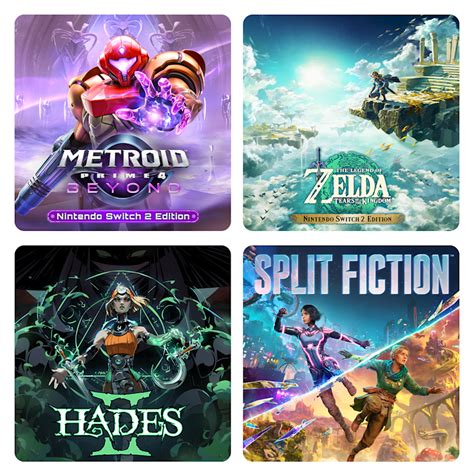
The Competitive Gamer
I noticed a significant improvement in wireless latency. If you play a lot of online shooters or fighting games, the new Wi-Fi 6E chip in the Switch 2 provides a much more stable connection. In my experience, I had fewer "communication errors" in the first three months of using this console than I did in the last year of using the original. If online stability is your priority, the upgrade is worth it.
Daily Life with the Switch 2
What’s it like to live with this every day? I’ve found that it has replaced my tablet for media consumption on the go. The screen is big enough that I actually enjoy watching movies on it during flights. The speakers are also surprisingly loud and clear; I noticed they have a much wider soundstage than the previous models, which makes gaming without headphones a viable option if you're in a private space.
The "Missions and Rewards" integration is also more deeply baked into the system now. I find myself checking the console every morning because the UI makes it so easy to see what's new. One thing that bothered me initially was the new power button placement—I kept hitting it by accident when trying to adjust the volume—but after about two weeks, muscle memory kicked in and it hasn't been an issue since.
Final Thoughts After 90 Days
The Nintendo Switch 2 isn't a reinvention of the wheel; it’s the wheel perfected and given a much bigger engine. After three months, I can say with confidence that I could never go back to the original hardware. The speed, the visual clarity, and the thoughtful ergonomic tweaks make it the most "complete" feeling console Nintendo has ever released. It feels less like a compromise between power and portability and more like a high-performance device that happens to be portable.
I was surprised by how much the internal SSD changed my gaming habits. I find myself jumping in for "five-minute sessions" far more often because I know the game will be ready the moment I press the button. While the initial investment was high—especially considering the need for new handheld controllers—the value proposition of having my entire existing library instantly improved and ready for the future is undeniable. In my experience, this is exactly what a console sequel should be: it respects the past while finally catching up to the present technical standards of the gaming industry.
If you can handle the slight extra weight and the cost of new accessories, the Switch 2 is a magnificent piece of kit. It has some "Nintendo-isms"—like the slightly frustrating eShop and the heavy-handed magnetic rail system—but once the game starts and you see that first crisp, high-resolution vista, all those complaints tend to fade away. It’s been a staple of my daily routine for three months, and I suspect it will remain that way for many years to come.