I Switched to the Ultra Open Earbuds Truly Wireless and Here is What Happened
Introduction
The landscape of personal audio has undergone a radical transformation over the last decade, transitioning from the tangled mess of wired connections to the seamless convenience of truly wireless stereo (TWS) technology. However, even within the TWS revolution, a certain level of physical isolation has remained the standard. Traditional earbuds rely on silicone tips that seal the ear canal to provide passive noise isolation and deep bass response. For many users, this "plugged-in" feeling is exactly what they want. But for a growing demographic of commuters, athletes, and office professionals, that very seal has become a point of contention.
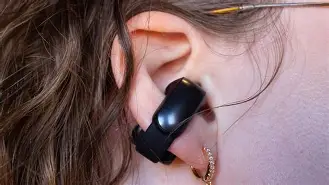
The Ultra Open Earbuds Truly Wireless represent a bold departure from this established design philosophy. Instead of inserting a driver into the ear or sealing the canal, these earbuds utilize a cuff-like design that grips the outer ear, leaving the ear canal completely unobstructed. This design innovation is not merely about comfort; it is about situational awareness. Switching to this form factor is more than just a hardware upgrade—it is a shift in how one interacts with their environment. In this detailed exploration, we analyze the experience of transitioning to the Ultra Open Earbuds and what happens when the barrier between digital audio and the physical world is finally removed.
The promise of open-ear audio is simple: the ability to hear your music, podcasts, or calls with high-fidelity clarity while simultaneously hearing the world around you as if you weren't wearing headphones at all. For those who find traditional earbuds uncomfortable or for those who need to maintain a constant connection to their surroundings, the Ultra Open Earbuds offer a unique proposition that challenges our assumptions about what a portable audio device should be.
Detailed Product Analysis
The Ultra Open Earbuds are a masterpiece of industrial design and acoustic engineering. At first glance, they look more like a piece of modern jewelry or a high-tech accessory than a traditional audio device. The "G-hook" design consists of a small, cylindrical battery and electronics housing that sits behind the ear, connected by a flexible, soft-touch silicone band to the driver unit that rests just outside the ear canal.
Design and Ergonomics
The most immediate change when switching to the Ultra Open Earbuds is the sensation—or rather, the lack thereof. Traditional earbuds exert pressure on the sensitive skin of the ear canal, which can lead to "ear fatigue" after just an hour of use. Because the Ultra Open Earbuds clip onto the side of the pinna (the outer ear), there is zero internal pressure. The flexible joint is engineered to provide just enough tension to stay secure during movement without pinching the cartilage. This makes them one of the few audio products that can genuinely be worn for an entire eight-hour workday without the wearer feeling the need to take a "breather."
Acoustic Performance and Proprietary Technology
The primary concern with open-ear designs has always been audio quality, specifically the loss of lower frequencies. Physics dictates that without a seal, bass waves tend to dissipate before they reach the eardrum. To combat this, the Ultra Open Earbuds utilize proprietary dipole transducer technology. This system is designed to project sound directly into the ear canal while cancelling out sound waves that move away from the ear. The result is a surprisingly rich and full-bodied sound profile that defies the limitations of its "open" nature.
While they may not match the sub-bass thump of professional-grade over-ear monitors, the mid-range clarity is exceptional. Vocals in podcasts are crisp and naturally positioned, and acoustic instruments retain a sense of air and space that is often lost in sealed earbuds. Furthermore, the specialized digital signal processing (DSP) compensates for the ambient noise of the environment, ensuring that the audio remains intelligible even in moderately noisy settings.
Situational Awareness and Safety
The real-world "killer feature" of these earbuds is the total transparency. Unlike "Transparency Mode" on traditional noise-canceling earbuds—which uses external microphones to pipe in ambient sound—the Ultra Open Earbuds provide natural transparency. There is no digital processing of the outside world; you hear things exactly as they are. Whether it is the sound of an approaching vehicle during an evening run, a colleague asking a question in an open-plan office, or the boarding announcement at a busy airport terminal, the wearer remains fully integrated into their surroundings.
Looking for the best Audio & Headphones deals on Amazon?
View Offers →Pros and Cons
Every technological shift involves trade-offs. The Ultra Open Earbuds are a specialized tool designed for a specific set of needs, and understanding where they excel and where they falter is essential for any potential buyer.
- Pro: Unmatched Long-Term Comfort. Since nothing enters the ear canal, there is no buildup of heat or pressure, making them ideal for all-day wear.
- Pro: Natural Situational Awareness. Users can maintain conversations and stay safe in urban environments without ever having to pause their audio or remove an earbud.
- Pro: Secure Fit for Activity. The cuff design is remarkably stable, even during high-intensity workouts or running, providing more security than many "plug" style buds.
- Pro: Minimal Sound Leakage. Despite being open-ear, the dipole technology ensures that people standing next to you rarely hear what you are listening to at moderate volumes.
- Con: Lack of Active Noise Cancellation (ANC). These are fundamentally the opposite of ANC headphones. If you are on a loud airplane or a screeching subway car, you will hear the noise along with your music.
- Con: Ambient Ceiling. In extremely loud environments, the ambient noise can overpower the audio drivers, forcing the user to crank the volume, which may impact battery life and ear health.
- Con: Bass Limitations. While impressive for the category, they cannot compete with the deep, vibrating bass produced by a sealed ear canal design.
Comparison with Leading Audio Categories
To understand where the Ultra Open Earbuds sit in the market, it is helpful to compare them against the three main competitors: standard in-ear buds, bone conduction headphones, and over-ear headphones.
| Feature | Ultra Open Earbuds | Standard In-Ear (TWS) | Bone Conduction |
|---|---|---|---|
| Fit Type | Outer-ear cuff | In-ear canal (sealed) | Temporal bone (vibration) |
| Awareness | 100% (Natural) | Digital (Transparency Mode) | 100% (Natural) |
| Audio Fidelity | High (Air Conduction) | Excellent (Sealed) | Lower (Vibrational) |
| Comfort | Exceptional (Zero pressure) | Moderate (Can be fatiguing) | Varies (Can vibrate skin) |
| Noise Isolation | None | High (Passive & ANC) | None |
Use Case Analysis: What Happens in Daily Life?
When the user stops looking at the spec sheet and starts using the Ultra Open Earbuds in the real world, the "Switch" reveals several life-changing habits and adjustments.
The Office Professional
In a modern workspace, the "headphones on" signal signifies "do not disturb." However, this often leaves employees feeling isolated or missing out on spontaneous collaborative moments. With the Ultra Open Earbuds, the wearer can listen to focus music or a low-volume deep-work playlist while still being able to hear their name if a teammate calls out. It eliminates the constant "on-off" cycle of traditional earbuds, allowing for a more fluid integration of digital tools and human interaction.
The Urban Commuter and Athlete
Safety is the primary driver for athletes. A cyclist or runner using sealed earbuds is effectively blinding one of their most important senses: hearing. Switching to an open design reduces the risk of accidents by ensuring that sirens, horns, and even the footsteps of others are audible. The Ultra Open Earbuds provide the high-quality soundtrack needed for motivation without the safety compromise of isolation.
The "Always-On" Podcast Listener
For those who consume audiobooks or podcasts throughout the day, these earbuds change the relationship with content. Because they are so comfortable, they become a sort of "augmented reality" for the ears. The audio feels like it is a narrated layer over your life rather than a replacement for it. Taking a phone call feels more like a natural conversation and less like a digital broadcast because you can hear your own voice naturally (eliminating the "head-in-a-bucket" occluded sound of sealed ears).
Buying Guide: Is the Switch Right for You?
The Ultra Open Earbuds are a premium solution, and before investing, buyers should consider their specific environments and priorities. This guide helps categorize whether you are the intended user for this innovative technology.
Who Should Buy Them?
If you find that silicone ear tips consistently cause irritation, itchiness, or pain, the open-ear design is the ultimate solution. Similarly, if you work in an environment where you must remain approachable and aware—such as a parent at home with young children or a professional in a reception or collaborative setting—these are the gold standard. Furthermore, if you are a "safety-first" outdoor athlete, there is no better way to balance audio quality with environmental awareness.
Shop the latest Audio & Headphones picks on Amazon.
Browse Now →Who Should Look Elsewhere?
If your primary use case is blocking out the world—specifically for frequent flyers, train commuters, or people who study in loud libraries—you will likely be disappointed by the lack of isolation. These earbuds do not provide a "quiet space." Additionally, audiophiles who prioritize the most accurate sub-bass response for critical listening of electronic or hip-hop music may find the open-air dissipation of low frequencies to be a dealbreaker.
Key Considerations Before Purchase
Consider your "volume profile." If you typically listen to music at 90% volume or higher, an open-ear design may lead to more sound leakage than a sealed design. However, at moderate volumes (40% to 60%), the Ultra Open Earbuds are remarkably discreet. Also, consider your interaction with other wearable tech; because these clip to the side of the ear, they generally do not interfere with glasses or helmets, which is a major advantage over traditional over-ear loops.
The Impact on Ear Health
One often overlooked aspect of the switch to open-ear technology is the potential benefit to ear hygiene and long-term hearing health. Traditional earbuds trap moisture and heat inside the ear canal, which can create an environment conducive to bacterial growth and ear infections. By leaving the canal open, air can circulate naturally, keeping the ear dry and healthy. Furthermore, some users find that they are less likely to listen at dangerously high volumes because they don't have to overcome the "occlusion effect" (the booming sound of your own voice/steps), though this depends heavily on the ambient noise level of the surroundings.
Natural Conclusion
Switching to the Ultra Open Earbuds Truly Wireless is a transformative experience for anyone who has felt constrained by the physical or social isolation of traditional earbuds. While the industry has spent years trying to figure out how to block out the world more effectively, this technology asks a different question: how can we bring our digital world into our physical one more harmoniously?
The result of this switch is a lifestyle where audio is a constant, subtle companion rather than a totalizing distraction. You don't have to choose between a phone call and your environment; you don't have to choose between a marathon-track and your safety. While they are not the perfect tool for the frequent traveler seeking silence, they are arguably the most versatile and comfortable daily-driver audio devices currently available on the market.
As the "always-on" culture of digital audio continues to grow, the Ultra Open Earbuds represent the logical endpoint of that trend—a device that stays with you all day, feels like nothing, and lets the world in even as it delivers your favorite sounds. For the right user, the switch isn't just about a new pair of headphones; it's about a new way to listen to life.